
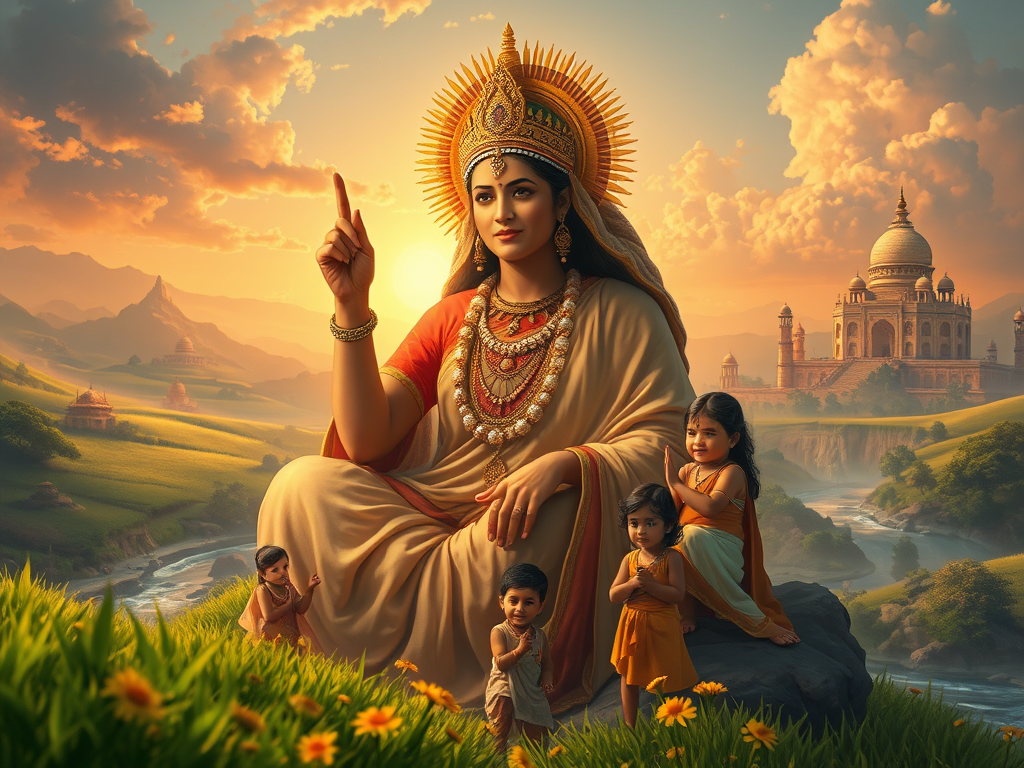
Vande Mataram. Every Indian knows its words.Textbooks drone on about how it was written and that it is the National Song of India. But beneath the surface, which seems like a jumble of complex Sanskrit words and phrases very few know how to read, there is a deeper meaning and a glorious beauty that shines but is often neglected, like how the ocean teems with an array of vibrant fish and plants deep underneath the outer waves.
‘I bow to thee, Mother’ is what the words ‘Vande Mataram’ literally translates to. Here, the mother is Bharat Mata. It’s not just a land. It is the mother of all Indians. It is the soul of the Indian people, the spirit of freedom after so many years of reign under the British tyranny. Like a mother, India nurtures its children, feeds them, waters them and above all, loves and cares for them. India is home, a goddess. This is what Vande Mataram depicts.
Let’s first delve into the history of this song. It was written by Bankim Chandra Chattopadhyay in the 1870s and was published in 1882 as part of his Bengali novel Anandamath. Despite the words being part of a Bengali novel, Vande Mataram was written in Bengalized Sanskrit. Don’t you think this subtle choice symbolises how Vande Mataram has always stood out from every other song, like a diamond in a pile of rocks?
But Vande Mataram’s journey to the throne of India’s national song wasn’t like a “POOF”—a wand, an incantation, and now you’re there. It didn’t become the national song until 24th January 1950, the same day that Jana Gana Mana was adopted as the national anthem.
Now, you must be wondering, “Why was it given this prestigious crown?’’ Vande Mataram was published and written in a time when Indian voices were afraid and trembling, when India was a slave in chains and we were not yet liberated. Then, the lesson this song gave was to love the country enough to die for it.
Now, it is “You are the architect of the building of India.” The result is a happy, prosperous nation. As Indians today, we should help build, design and shape it. Vande Mataram means thinking selflessly and liberally, putting out fires (literally and figuratively) and just wishing the best towards our nation and working together for its amelioration and empowerment. The message of this song keeps changing as the world changes, as our nation changes, but the core quote will always be the same, pulsing in each beat of an Indian’s heart, love your country and it will love you back. Keep striving to make it even better and you will be a better person yourself.
The national song of India may be in Sanskrit but that doesn’t mean we can’t understand it. The essence of the song beats in our hearts, flows in our blood, sparks in our eyes. Vande Mataram is the soul and thoughts of the people. They keep changing, they never stay in one place, they wander but the love towards the country and the song never wavers. Instead, it keeps growing like a fire that can never be appeased.
Thus, I conclude that Vande Mataram is more than a song; it is an eternal anthem of hope, pride and unity. It is the unbreakable pillar supporting the skyscraper of our nation.
Jai Hind!
- Anaya Sheth
 DREAMS IN SCRIBBLES
Leave a comment